Thursday, October 31, 2013

Propofol's effect on the sciatic nerve: Harmful or protective?

Propofol's effect on the sciatic nerve: Harmful or protective?


[ Back to EurekAlert! ]

PUBLIC RELEASE DATE:

30-Oct-2013


[


| E-mail

]


Share Share

Contact: Meng Zhao
eic@nrren.org
86-138-049-98773
Neural Regeneration Research


Propofol is a rapid, but short-acting, intravenous drug that is preferentially used for the induction and maintenance of anesthesia. Propofol can inhibit inflammation and suppress the secretion of the proinflammatory cytokines interleukin-1, interleukin-6 and tumor necrosis factor alpha from astrocytes, and enhance the synthesis and release of the anti-inflammatory cytokine interleukin-10. Consequently, propofol can inhibit damage caused by proinflammatory cytokines and exert protective effects on the central nervous system. A recent study published in the Neural Regeneration Research (Vol. 8, No. 27, 2013) showed that after propofol was injected into the injured sciatic nerve of mice, nuclear factor kappa B expression in the L46 segments of the spinal cord in the injured side was reduced, apoptosis was decreased, nerve myelin defects were alleviated, and the nerve conduction block was lessened. The experimental findings indicate that propofol inhibits the inflammatory and immune responses, decreases the expression of nuclear factor kappa B, and reduces apoptosis. These effects of propofol promote regeneration following sciatic nerve injury.

###

Article: " Propofol's effect on the sciatic nerve: harmful or protective?," by Yi Sun, Xizhe Zhang, Qi Zhou, Yong'an Wang, Yiwen Jiang, Jian Cao (Chifeng Municipal Hospital, Chifeng 024000, Inner Mongolia Autonomous Region, China)


Sun Y, Zhang XZ, Zhou Q, Wang YA, Jiang YW, Cao J. Propofol's effect on the sciatic nerve: harmful or protective? Neural Regen Res. 2013;8(27):2520-2530.


Contact:

Meng Zhao

eic@nrren.org

86-138-049-98773

Neural Regeneration Research

http://www.nrronline.org/

Full text: http://www.sjzsyj.org/CN/article/downloadArticleFile.do?attachType=PDF&id=725


[ Back to EurekAlert! ]

[


| E-mail


Share Share

]


AAAS and EurekAlert! are not responsible for the accuracy of news releases posted to EurekAlert! by contributing institutions or for the use of any information through the EurekAlert! system.


Propofol's effect on the sciatic nerve: Harmful or protective?


[ Back to EurekAlert! ]

PUBLIC RELEASE DATE:

30-Oct-2013


[


| E-mail

]


Share Share

Contact: Meng Zhao
eic@nrren.org
86-138-049-98773
Neural Regeneration Research


Propofol is a rapid, but short-acting, intravenous drug that is preferentially used for the induction and maintenance of anesthesia. Propofol can inhibit inflammation and suppress the secretion of the proinflammatory cytokines interleukin-1, interleukin-6 and tumor necrosis factor alpha from astrocytes, and enhance the synthesis and release of the anti-inflammatory cytokine interleukin-10. Consequently, propofol can inhibit damage caused by proinflammatory cytokines and exert protective effects on the central nervous system. A recent study published in the Neural Regeneration Research (Vol. 8, No. 27, 2013) showed that after propofol was injected into the injured sciatic nerve of mice, nuclear factor kappa B expression in the L46 segments of the spinal cord in the injured side was reduced, apoptosis was decreased, nerve myelin defects were alleviated, and the nerve conduction block was lessened. The experimental findings indicate that propofol inhibits the inflammatory and immune responses, decreases the expression of nuclear factor kappa B, and reduces apoptosis. These effects of propofol promote regeneration following sciatic nerve injury.

###

Article: " Propofol's effect on the sciatic nerve: harmful or protective?," by Yi Sun, Xizhe Zhang, Qi Zhou, Yong'an Wang, Yiwen Jiang, Jian Cao (Chifeng Municipal Hospital, Chifeng 024000, Inner Mongolia Autonomous Region, China)


Sun Y, Zhang XZ, Zhou Q, Wang YA, Jiang YW, Cao J. Propofol's effect on the sciatic nerve: harmful or protective? Neural Regen Res. 2013;8(27):2520-2530.


Contact:

Meng Zhao

eic@nrren.org

86-138-049-98773

Neural Regeneration Research

http://www.nrronline.org/

Full text: http://www.sjzsyj.org/CN/article/downloadArticleFile.do?attachType=PDF&id=725


[ Back to EurekAlert! ]

[


| E-mail


Share Share

]


AAAS and EurekAlert! are not responsible for the accuracy of news releases posted to EurekAlert! by contributing institutions or for the use of any information through the EurekAlert! system.


Source: http://www.eurekalert.org/pub_releases/2013-10/nrr-peo103013.php
Related Topics: Ink Master   Cal Worthington   grandparents day   bay bridge   new iphone  

TV cameras go live in UK's Court of Appeal


LONDON (AP) — Lights, camera, appeal!

Television cameras were allowed for the first time in one of Britain's highest courts Thursday after a partial lifting of a nearly 90-year ban on filming in courts. The landmark shift comes after years of campaigning from broadcasters such as the BBC, Sky News and ITN.

James Harding, the BBC's director of news, said broadcasting proceedings at the Court of Appeal will help viewers understand how the justice system works. In the first broadcast case, a man lost his appeal of a 7-year sentence for counterfeiting.

Lawyers' arguments, judges' comments and sentencing remarks may be filmed, but victims, witnesses and defendants may not.

Some cases will be broadcast with a 70-second delay.

Source: http://news.yahoo.com/tv-cameras-live-uks-court-appeal-123334036.html
Category: Bad Grandpa   Monika Jakisic   Americas Cup   katie couric   Myla Sinanaj  

Cards competed right to last pitch, Matheny


Boston (AFP) - Sometime between Shane Victorino's base-clearing double and Matt Carpenter's bungled run-down at first base, the St. Louis Cardinals realized this wasn't going to be their night.

Too much fatigue, too much terrific pitching from the Boston Red Sox and too much of David Ortiz's blistering bat.

"Right now, it sucks, to get here and lose," shortstop Daniel Descalso said after St. Louis lost 6-1 Wednesday to drop the World Series four games to two. "We did a lot of good things this year, but right now it's tough to think about that."

The Cardinals simply didn't have an answer for Ortiz. When they pitched to him early in the series Ortiz got on base consistently and when they tried walking him in game six, his teammates picked up the slack.

"He is as hot as anyone you are going to see this time of year," said St. Louis manager Mike Matheny. "We tried to pitch around him at times. They got big hits in big situations."

With the season on the line, St. Louis went with rookie hurler Michael Wacha as their starter Wednesday. Wacha lasted 3 2/3 innings and surrendered four runs on six hits.

"This kid has been absolutely fantastic," Matheny said of Wacha. "We are not here if he doesn't do what he's done for us over the postseason."

Matheny said he couldn't be more proud of his charges.

"There are some frustrated guys in there but overall you can't ask us to go about any better than our guys did.

"How they carried themselves. How they competed. But we did have a couple of games that we just didn't look like ourselves offensively."

St. Louis found itself in this same position back in 2011, but rallied to win games six and seven. However, those games were played at Busch Stadium.

The Cardinals were taking aim at their second World Series title in three years. They beat Boston in the World Series in 1946 and 1967.

"It stinks to get this far and lose," said pitcher Jason Motte. "But a lot of these guys came up and showed what they're capable of."

The strangest moment of Wednesday's game for the Cardinals was when second baseman Carpenter and pitcher Kevin Siegrist botched a routine rundown of Boston's Jacoby Ellsbury in the fifth inning.

Ellsbury appeared to be caught off the bag in no man's land but he raced past the pair and safely made it back to first base. Carpenter was slapped with an error on the play.

Said Matheny, "I told them to hold their head high. They have nothing to be ashamed of.

"We all know that we could come out and play a better game than what we did here, but we did a whole lot more than anybody gave us credit for or expected us to do.

"There's a lot of things that they can look on in a negative way, but this isn't the time for it."

Source: http://news.yahoo.com/cards-competed-last-pitch-matheny-135056984--mlb.html
Tags: world series game 4   Paula Patton   zac efron   Cody Rhodes   nasdaq  

Some Syrians lose themselves in music as war rages


DAMASCUS, Syria (AP) — As cannons thundered and mortar shells exploded nearby, the young Syrian woman in a slinky dark dress and stylish bob performed a song by pop star Adele, taking refuge behind a microphone from the civil war raging outside.

Performing with a guitarist at a cafe in the heart of the historic Old Town of Damascus, Reem Khunsar lost herself in the lyrics. About a failed love, they also struck a chord closer to home: "Who would have known how bittersweet this would taste?"

While most people in the Syrian capital lock themselves fearfully in their homes at night, young Syrians dressed in tight jeans and designer clothes go wild at the handful of clubs still operating in a city once renowned for its nightlife.

"The war can't stop life," declared Oday Al-Khayyatt, as he took in the music scene at the Roma cafe. "You hear bad news in Syria, dangers, war and death. But in our reality, we are still alive."

Such revelries show the human side of a conflict that has killed more than 120,000 people as the Syrian civil war grinds into its third year.

The Damascus nightclub scene often gets mentioned by the Syrian state news agency SANA on its English-language Twitter feed, drawing ridicule from observers outside the country. But people still brave the dangers to come to the cafes to take their mind off what is happening.

At the Roma Cafe, couples smiled as they danced on the black-and-white checkered dance floor. Some smoked flavored tobacco from water pipes. Women, some in big hair and low-cut dresses and others wearing headscarves, chatted as they mingled by the bar. There were no liquor bottles in sight, though some patrons were able to buy alcohol.

"There is a big difference between now and before the war," conceded Titar Sahinian, another young singer. "People are afraid to come out of their houses ... but they still come.

"Of course, it's all devastating. We can't pretend that nothing is happening. But at the same time we can't stop living," she said.

As she spoke, the sound of government cannons pounding rebels just a few miles away echoed down the stone walls of the ancient quarter. Nearby, so-called Popular Committees, local hard-line militiamen brandishing Kalashnikov assault rifles, threw up impromptu roadblocks, searching cars for bombs.

They also kept a close watch on the young revelers, many of whom said they believe the militiamen, die-hard supporters of President Bashar Assad and his embattled government, don't approve of the Damascus nightlife.

"We were afraid of being attacked" by the popular committee militiamen, Roma cafe owner Rami Dahbour said. "We were threatened once. But nothing happened, and we are no longer affected by the threat."

Several mortars launched from rebel positions on the outskirts of Damascus have rained down near the cafe. Still, the singing goes on.

Khunsar said she feels like she is giving hope to the people who come to listen.

"Here in Syria we have not given up," she said. "We hope that everything will go back to where it was before."

As she threw herself into the Metallica classic, "Nothing Else Matters," those in the cafe joined in: "Life is ours and we live it our way, I don't just say, and nothing else matters."

___

Associated Press writers Darko Bandic and Dusan Vranic contributed to this report.

Source: http://news.yahoo.com/syrians-lose-themselves-music-war-rages-184727305.html
Similar Articles: Steam Controller   ncis   USA VS Mexico   true blood   Anastasia Ashley  

Air traffic control modernization hits turbulence


WASHINGTON (AP) — Ten years after Congress gave the go-ahead to modernize the nation's air traffic control system, one of the government's most ambitious and complex technology programs is in trouble.

The Next Generation Air Transportation System, or NextGen, was promoted as a way to accommodate an anticipated surge in air travel, reduce fuel consumption and improve safety and efficiency. By shifting from radar-based navigation and radio communications — technologies rooted in the first half of the 20th century — to satellite-based navigation and digital communications, it would handle three times as many planes with half as many air traffic controllers by 2025, the Federal Aviation Administration promised.

Planes would fly directly to their destinations using GPS technology instead of following indirect routes to stay within the range of ground stations. They would continually broadcast their exact positions, not only to air traffic controllers, but to other similarly equipped aircraft. For the first time, pilots would be able to see on cockpit displays where they were in relation to other planes. That would enable planes to safely fly closer together, and even shift some of the responsibility for maintaining a safe separation of planes from controllers to pilots.

But almost nothing has happened as FAA officials anticipated.

Increasing capacity is no longer as urgent as it once seemed. The 1 billion passengers a year the FAA predicted by 2014 has now been shoved back to 2027. Air traffic operations — takeoffs, landings and other procedures — are down 26 percent from their peak in 2000, although chronic congestion at some large airports can slow flights across the country.

Difficulties have cropped up at almost every turn, from new landing procedures that were impossible for some planes to fly to aircraft-tracking software that misidentified planes. Key initiatives are experiencing delays and are at risk of cost overruns. And the agency still lacks "an executable plan" for bringing NextGen fully online, according to a government watchdog.

"In the early stages, the message seemed to be that NextGen implementation was going to be pretty easy: You're going to flip a switch, you're going to get NextGen, we're going to get capacity gains," said Christopher Oswald, vice president for safety and regulatory affairs at Airports Council International-North America. "It wasn't realistically presented."

Some airline officials, frustrated that they haven't seen promised money-saving benefits, say they want better results before they spend more to equip planes to use NextGen, a step vital to its success.

Lawmakers, too, are frustrated. NextGen has enjoyed broad bipartisan support in Congress, but with the government facing another round of automatic spending cuts, supporters fear the program will be increasingly starved for money.

"It's hard not to be worried about NextGen funding ... because it's a future system," said Marion Blakey, who was the head of the FAA when the program was authorized by Congress in 2003 and now leads a trade association that includes NextGen contractors. "There is a temptation to say the priority is keeping the existing systems humming and we'll just postpone NextGen."

In September, a government-industry advisory committee recommended that, given the likelihood of budget cuts, the FAA should concentrate on just 11 NextGen initiatives that are ready or nearly ready to come online. It said the rest of the 150 initiatives that fall under NextGen can wait.

"You can't have an infrastructure project that is the equivalent of what the (interstate) highway program was back in the '50s and the '60s and take this ad hoc, hodgepodge approach to moving this thing forward," said Air Line Pilots Association First Vice President Sean Cassidy, who helped draft the recommendations.

The threat of funding cuts comes just as NextGen is nearing a tipping point where economic and other benefits should start to multiply if only the FAA and industry would persevere, said Alaska Airlines Chairman Bill Ayers, a supporter.

Responding to industry complaints, the FAA has zeroed in on an element of NextGen that promises near-term benefits: new procedures that save time and fuel in landings while decreasing greenhouse gas emissions. Planes equipped with highly calibrated GPS navigation are able fly precise, continuous descents on low power all the way to the runway rather than the customary and time-consuming stair-step approaches in which pilots repeatedly decrease power to descend and then increase power to level off.

Last spring, Seattle-Tacoma International Airport became the first large airport where airlines can consistently use one of the new procedures. Known as HAWKS, the procedure shortens the approach from the southwest by about 42 miles. Multiplied over many planes every day it adds to up to significant savings, an enticing prospect for airlines, which typically operate on razor-thin profit margins.

Alaska, with a major hub in Seattle, estimates new procedures there will eventually cut the airline's fuel consumption by 2.1 million gallons annually and reduce carbon emissions by 24,250 tons, the equivalent of taking 4,100 cars off the road every year. Fuel is the biggest expense for most airlines.

In Atlanta, more precise navigation procedures have increased the number of departure paths that planes can fly at the same time, enabling takeoffs to double from one every two minutes to one every minute. That has freed up an additional runway for arrivals, said Dale Wright, the National Air Traffic Controllers Association's safety and technology director.

FAA Administrator Michael Huerta says NextGen is on track despite the troubles.

"It's a significant transformation that we're making," he told The Associated Press. "I would hope it would be moving faster as well, but we have a very large, a very complex system, and we're making great progress."

But even use of the GPS-based procedures has been slowed by unforeseen problems. It takes several years to develop each procedure airport by airport. At large airports, new procedures are used only sporadically. During busy periods, controllers don't have time to switch back and forth between the new procedures, which most airliners can use, and older procedures that regional airliners and smaller planes often must still use. Consequently, older procedures are used because all planes can fly them.

At six large airports in Chicago, New York and Washington, only 3 percent of eligible flights have used the new procedures, Calvin Scovel, the Transportation Department's inspector general, told a congressional hearing in July. Many other NextGen initiatives "are still in the early stages of development," he said.

Another important NextGen initiative would replace radio communications between controllers and pilots with text messaging and digital downloads. Radio frequencies are often crowded, and information sometimes must be repeated because of mistakes or words not heard. Digital communications are expected to be safer and more efficient.

But airlines are reluctant to make additional investments in new communications equipment for planes until the FAA shows NextGen can deliver greater benefits like fuel savings from more precise procedures, said Dan Elwell, a senior vice president at Airlines for America, a trade association for major carriers.

Southwest Airlines spent more than $100 million in 2007 to equip its planes to use the new procedures. The airline expected to recoup its investment by 2011, but is still not there, primarily because of the FAA's slow pace, said Rick Dalton, Southwest's director of air space and flow management.

NextGen was originally forecast to cost $40 billion, split between government and industry, and to be completed by 2025. But an internal FAA report estimates it will cost three times that much and take 10 years longer to complete, Scovel said. FAA officials have largely stopped talking about end dates and completion costs as the technologies that make up NextGen continue to evolve. The agency currently spends about $800 million a year on the program.

"When we're talking about NextGen, it's like we're talking about the atmosphere," Cassidy said. "It's tough to pin down exactly what NextGen is in terms of the technologies and the cost of the technologies because, frankly, they're changing all the time."

Hopefully the FAA can make a "mid-course correction" to get NextGen on track, said Rep. Rick Larsen, D-Wash., a supporter. "We shouldn't give up on the effort because I think everybody understands there is a lot of benefit to it."

But he's concerned that more delays in the program "could force us to rename it LastGen."

___

Follow Joan Lowy on Twitter at http://www.twitter.com/AP_Joan_Lowy

Source: http://news.yahoo.com/air-traffic-control-modernization-hits-turbulence-070821373--finance.html
Tags: Josh Freeman   Grambling State University   NBA 2K14   Erwin Schrödinger   Kendrick Lamar Verse  

The TechCrunch Disrupt Europe Hackathon Is Underway!


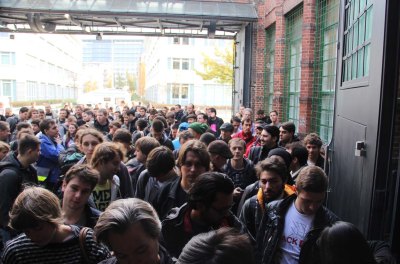
And they’re off! TechCrunch’s first Disrupt Europe Hackathon is officially underway. There are hundreds of registered coders, hackers, and designers. More than $5,000 is on the line and the deadline is tomorrow morning. Plus, Foresquare brought a box of dodgeballs so things will get wild.


Thanks to Daylight Savings time ending in Europe tonight, the attendees get an extra hour of coding, too.


Apps must be submitted and approved by 9:30am on Sunday morning. The presentations start just a half an hour later. The teams have just 60 seconds to impress a panel of judges. The top three teams get to present their projects again just a few days later — but this time, it’s in front of the massive audience at the main Disrupt conference. And because we like to sneak as many clever people into our conferences as possible: the top 50 teams each get 2 tickets to the main Disrupt Europe event (valued at nearly €1,000 each)


We’re holding Disrupt in Europe for the first time and that includes the Hackathon that runs through the weekend. Starting Monday, Arena Berlin will play host to dozens of speakers, hundreds of startups and thousands of attendees. Like State-side Disrupt conferences the show will also include Startup Battlefield in which 15 startups will launch for first time and compete for a giant $50,000 check.


Registration is closed for the Hackathon but tickets are still available for Disrupt Europe.


You can follow and comment on the conference by using the #DisruptBerlin and #HackDisrupt hashtag.


  1. IMG_8869


  2. IMG_8866


  3. IMG_8825


  4. IMG_8827


  5. IMG_8840


  6. IMG_8826


  7. IMG_8843


  8. IMG_8848


  9. IMG_8828


  10. IMG_8856


  11. IMG_8850


  12. IMG_8824


  13. IMG_8852


  14. IMG_8853


  15. IMG_8813


  16. IMG_8857


WiFi Info


SSID: Deutsche Telekom or Deutsche Telekom 2.4
Password: techcrunch


Please note, all times are subject to change. The final awards may be held earlier or later depending on the duration of hack presentations.


Saturday, October 26, 2013


12:30pm – Registration opens, Lunch/Beverages served. Come alone? Use the opportunity to find a team!


1:30pm – Hacking Kickoff


2:00pm – Paymill (Room A)


2:30pm – Box (Room B)


3:00pm – Lufstansa (Room A)


7:00pm – Dinner


Midnight – Food and snacks


Sunday, October 27, 2013


7:00am – Breakfast served


9:30am – Hacking concludes and hacks submitted to wiki. HACKS MUST BE SUBMITTED by 9:30 A.M.


10:00am – General public (friends, family) welcome to enter auditorium to view hackathon presentations


11:00am – Hackathon presentations begin


2:00pm – Hackathon Awards


6-9pm – After-Hackathon Party (Webrazzi)


Source: http://feedproxy.google.com/~r/Techcrunch/~3/2g4dtX9vAew/
Category: eric decker   Battlefield 4 beta   ricin   iOS 7 download   alice eve  

Samsung's takes baby steps in touting Tizen OS to developers


The open source Tizen mobile operating system is one of the most visible examples that Samsung isn't completely dependent on the Android mobile OS.


At the Samsung Developer Conference in San Francisco this week, Samsung held a single breakout session on developing apps using Tizen. The session was led by two engineers from Intel, which is working jointly with Samsung to create code to enable Tizen to run across multiple hardware platforms, including tablets, smartphones, cars and smart TVs.


[ Also on InfoWorld: The 8 mobile OS upstarts that want to topple iOS and Android. | InfoWorld presents the Bossies 2013, the best open source software for clouds, mobile, developers, and more. | Track trends in open source with InfoWorld's Open Sources blog and Technology: Open Source newsletter. ]


Most of Samsung's smartphones and tablets today run Android or the company's own Bada OS. In fact, Samsung is by far the largest Android smartphone maker globally, as well as the largest maker of smartphones overall, according to IDC and others.


The company does make Windows Phone smartphones as well, though a Windows Phone session wasn't among among the 50 scheduled at the developer conference. Nearly all of the sessions focused on applications or services that work on Android.


Tizen has a modern Internet interface for use on devices, supporting HTML 5 and other Web technologies, so developers can theoretically write applications once to work on many devices. A Samsung roadmap for Tizen rollouts hasn't been announced.


At the Tizen session on Tuesday, two developers in the audience said they had different experiences with their early Tizen development efforts. Developers at MightyMeeting, a maker of business collaboration applications, have been using Tizen with promising results because of its use of HTML 5 across platforms, said Mighty Meeting CEO Dmitri Tcherevik.


On the other hand, Shivakumar Mathapathi, COO at Dew Mobility, said his company tried Tizen with Windows Phone devices and found it wasn't very stable on the Microsoft mobile OS. He didn't provide any details.


Tcherevik said that Samsung's interest in Tizen demonstrates that it's "willing to try many different things" even as a large company.


Some attendees at Samsung's first developer conference said they were glad to see Samsung to show off its distinctive features with Android at an event other than Google I/O. Here, Samsung could separate itself from other Android smartphone and tablet makers.


Source: http://images.infoworld.com/d/mobile-technology/samsungs-takes-baby-steps-in-touting-tizen-os-developers-229816?source=rss_mobile_technology
Tags: chicago fire   nfl standings   legend of korra   diana nyad   Payday 2